

Introduction#
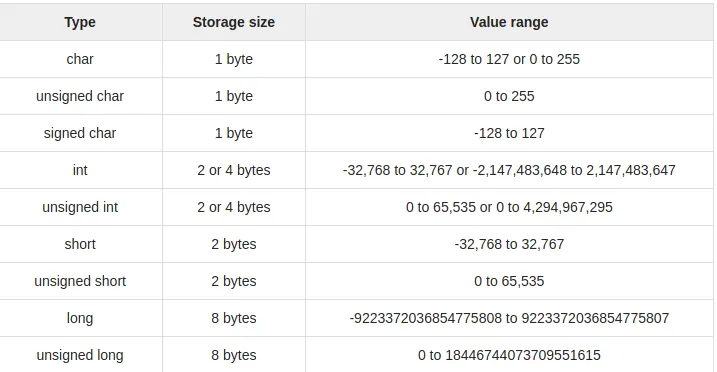
char is the most basic data type in C. It stores a single character and requires a single byte of memory in almost all compilers.
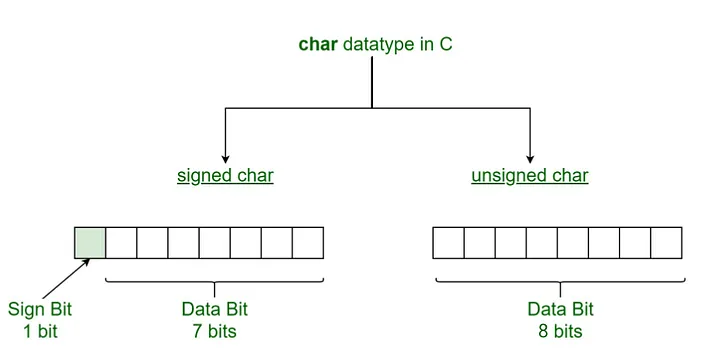
Now character datatype can be divided into 2 types:
signed char
unsigned char
unsigned char#
- unsigned char is a character datatype where the variable consumes all the 8 bits of the memory and there is no sign bit (which is there in signed char). So it means that the range of unsigned char data type ranges from 0 to 255.
Syntax:
unsigned char [variable_name] = [value]
Example:
unsigned char ch = 'a';
Initializing an unsigned char#
- Initializing an unsigned char: Here we try to insert a char in the unsigned char variable with the help of ASCII value. So the ASCII value 97 will be converted to a character value, i.e. ‘a’ and it will be inserted in unsigned char.
// C program to show unsigned char

#include <stdio.h>

int main()
{

 int chr = 97;
 unsigned char i = chr;
 printf("unsigned char: %c\n", i);

 return 0;
}
Output:
unsigned char: a
- Initializing an unsigned char with signed value: Here we try to insert a char in the unsigned char variable with the help of ASCII value. So the ASCII value -1 will be first converted to a range 0–255 by rounding. So it will be 255. Now, this value will be converted to a character value, i.e. ‘ÿ’ and it will be inserted in unsigned char.
// C program to show unsigned char

#include <stdio.h>

int main()
{

 int chr = -1;
 unsigned char i = chr;
 printf("unsigned char: %c\n", i);

 return 0;
}
Output:
unsigned char: ÿ