

Challenge Name: TOP SECRET
Category: Cryptography
CTF: CyberSummit V4.0 CTF
Description: SUKUNA is On a secret mission all along, but the only trace he left is this bon file i can’t seem to get a hint of it can you help me
Initial Reconnaissance#
We were given two files out.bin and script.py
The first step was checking what files we actually had and what type of artifact out.bin was.
ls
file out.bin
Then we opened script.py and found the full encryption flow.
import os, struct, random
from pathlib import Path
from Crypto.Cipher import AES
from Crypto.Util.Padding import pad

HIDDEN_KEY = b'\xde\xad\xbe\xef\xca\xfe\xba\xbe'
AES_KEY  = bytes.fromhex('0123456789abcdef0123456789abcdef0123456789abcdef0123456789abcdef')
AES_IV   = bytes.fromhex('cafebabe0000000000000000deadbeef')
BLOCK_SIZE = 64
RANDOM = 1337
X_SEED = 42
X = 1024

def xor_bytes(data, key):
    return bytes(b ^ key[i % len(key)] for i, b in enumerate(data))

def shuffle_blocks(data, seed, block_size):
    blocks = [data[i:i+block_size] for i in range(0, len(data), block_size)]
    r = random.Random(seed)
    r.shuffle(blocks)
    return b''.join(blocks), [blocks.index(b) for b in [data[i:i+block_size] for i in range(0,len(data),block_size)]]

def inject_padding(data, size, seed):
    r = random.Random(seed)
    n = r.randint(3, 8)
    positions = sorted(r.sample(range(len(data)+1), n))
    result = bytearray()
    prev = 0
    for pos in positions:
        result += data[prev:pos]
        chunk_size = size // n
        result += bytes([r.randint(0,255) for _ in range(chunk_size)])
        prev = pos
    result += data[prev:]
    return bytes(result)

def encrypt(input_path, output_path):
    data = Path(input_path).read_bytes()
    print(f'[*] original size: {len(data)} bytes')

    data = xor_bytes(data, HIDDEN_KEY)
    cipher = AES.new(AES_KEY, AES.MODE_CBC, AES_IV)
    data = cipher.encrypt(pad(data, AES.block_size))
    data, _ = shuffle_blocks(data, RANDOM, BLOCK_SIZE)
    data = inject_padding(data, X, X_SEED)
    header = b'BANG' + struct.pack('>I', len(data))
    Path(output_path).write_bytes(header + data)
    print(f'[+] written to {output_path} ({len(header)+len(data)} bytes)')

if __name__ == '__main__':
    import sys
    encrypt(sys.argv[1], sys.argv[2])
Key observations from script.py:
- Data is XORed with a fixed key (
HIDDEN_KEY). - Then encrypted with AES-CBC (fixed key + fixed IV).
- Then shuffled in deterministic 64-byte blocks (seed = 1337).
- Then random junk is injected using deterministic RNG (seed = 42, total size = 1024).
- Final file is wrapped with a custom header:
BANG+ big-endian length.
So this was not brute force crypto. It was deterministic obfuscation that can be reversed exactly.
Thinking Process#
The challenge looked noisy because of layers, but every layer was reversible:
BANGheader gives us exact payload boundary.- Padding junk is deterministic because RNG seed and algorithm are known.
- Shuffle is deterministic because seed is known.
- AES key/IV are hardcoded in the script.
- XOR key is also hardcoded.
That means the solver should just replay the exact inverse pipeline in reverse order:
parse header -> strip junk -> unshuffle -> AES decrypt -> XOR -> recovered image
How We Wrote The Solver#
We built the solver in practical stages:
1) Parse and validate the custom container
We check magic bytes BANG and read the 4-byte payload length. This avoids accidental trailing-byte mistakes.
2) Remove injected junk first
Because junk was added after all crypto transforms, we remove it first.
For the default mode (random_junk):
- Recreate RNG with seed 42.
- Recompute number of insertion points
nand chunk sizesize // n. - Rebuild original insertion positions.
- Copy real segments and skip junk chunks.
3) Reverse the block shuffle
We regenerate the same shuffled index permutation with seed 1337 and invert the mapping to restore original block order.
4) AES-CBC decrypt
Decrypt with the same key and IV from script.py, then unpad PKCS#7.
5) Reverse XOR
Apply the same repeating XOR key to get original bytes back.
6) Validate output
Check for image magic bytes (PNG/JPEG/BMP/GIF/WEBP) and write the recovered file.
Full solver.py#
#!/usr/bin/env python3


import os
import sys
import struct
import random
import argparse
import base64
from pathlib import Path

# ──────────────────────────────────────────────
#  KEYS & CONSTANTS
# ──────────────────────────────────────────────
XOR_KEY      = b'\xde\xad\xbe\xef\xca\xfe\xba\xbe'
AES_KEY      = bytes.fromhex('0123456789abcdef0123456789abcdef'
         '0123456789abcdef0123456789abcdef')
AES_IV       = bytes.fromhex('cafebabe0000000000000000deadbeef')
RC4_KEY      = b'CTFchallenge2024'
BLOCK_SIZE   = 64
SHUFFLE_SEED = 1337
PAD_SEED     = 42
PAD_SIZE     = 1024


MAGIC = b'BANG'

# ──────────────────────────────────────────────
#  CIPHER PRIMITIVES
# ──────────────────────────────────────────────

def xor_bytes(data: bytes, key: bytes) -> bytes:
 return bytes(b ^ key[i % len(key)] for i, b in enumerate(data))


def rc4(data: bytes, key: bytes) -> bytes:
 S = list(range(256))
 j = 0
 for i in range(256):
  j = (j + S[i] + key[i % len(key)]) % 256
  S[i], S[j] = S[j], S[i]
 i = j = 0
 out = []
 for byte in data:
  i = (i + 1) % 256
  j = (j + S[i]) % 256
  S[i], S[j] = S[j], S[i]
  out.append(byte ^ S[(S[i] + S[j]) % 256])
 return bytes(out)


def aes_decrypt(data: bytes) -> bytes:
 from Crypto.Cipher import AES
 from Crypto.Util.Padding import unpad
 cipher = AES.new(AES_KEY, AES.MODE_CBC, AES_IV)
 return unpad(cipher.decrypt(data), AES.block_size)


def unshuffle_blocks(data: bytes, seed: int, block_size: int) -> bytes:
 """Reverse the deterministic block shuffle."""
 blocks = [data[i:i+block_size] for i in range(0, len(data), block_size)]
 r = random.Random(seed)
 indices = list(range(len(blocks)))
 r.shuffle(indices)
 # indices[new_pos] = orig_pos  →  result[orig_pos] = blocks[new_pos]
 result = [None] * len(blocks)
 for new_i, orig_i in enumerate(indices):
  result[orig_i] = blocks[new_i]
 return b''.join(result)


# ──────────────────────────────────────────────
#  PADDING STRIPPERS
# ──────────────────────────────────────────────

def strip_random_junk(data: bytes, size: int, seed: int) -> bytes:
 r = random.Random(seed)
 n = r.randint(3, 8)
 chunk_size = size // n

 # total padded length = original + n*chunk_size
 original_len = len(data) - n * chunk_size

 # replay RNG to get positions (sampled from original_len+1 range)
 r2 = random.Random(seed)
 r2.randint(3, 8)                            # consume the 'n' draw
 positions = sorted(r2.sample(range(original_len + 1), n))

 result = bytearray()
 src = 0     # cursor into padded data
 prev_pos = 0
 for pos in positions:
  segment_len = pos - prev_pos
  result += data[src:src + segment_len]
  src += segment_len + chunk_size         # skip injected junk
  prev_pos = pos
 result += data[src:]
 return bytes(result)


def strip_lorem(data: bytes, size: int, seed: int) -> bytes:
 chunk = size // 4
 n = 4
 original_len = len(data) - n * chunk

 r = random.Random(seed)
 positions = sorted(r.sample(range(original_len + 1), n))

 result = bytearray()
 src = 0
 prev_pos = 0
 for pos in positions:
  segment_len = pos - prev_pos
  result += data[src:src + segment_len]
  src += segment_len + chunk
  prev_pos = pos
 result += data[src:]
 return bytes(result)


def strip_file_chunks(data: bytes, size: int, seed: int) -> bytes:
 chunk = size // 8

 # estimate: padded = orig + (orig//stride)*chunk, stride = orig//8
 # padded = orig + 8*chunk  (there are exactly 8 strides)
 original_len_est = len(data) - 8 * chunk
 stride = max(1, original_len_est // 8)

 result = bytearray()
 i = 0
 while i < len(data):
  result += data[i:i + stride]
  i += stride + chunk
 return bytes(result)


def strip_null_blocks(data: bytes, size: int) -> bytes:
 result = bytearray()
 i = 0
 null_block = b'\x00' * size
 while i <= len(data) - size:
  if data[i:i + size] == null_block:
   i += size
  else:
   result.append(data[i])
   i += 1
 result += data[i:]
 return bytes(result)


# ──────────────────────────────────────────────
#  LAYER DETECTION HELPERS
# ──────────────────────────────────────────────

def looks_like_png(data: bytes) -> bool:
 return data[:8] == b'\x89PNG\r\n\x1a\n'


def looks_like_image(data: bytes) -> bool:
 """Heuristic: PNG, JPEG, BMP, GIF, WEBP magic bytes."""
 return (looks_like_png(data) or
   data[:3] == b'\xff\xd8\xff' or   # JPEG
   data[:2] == b'BM'              or   # BMP
   data[:6] in (b'GIF87a', b'GIF89a') or
   data[:4] == b'RIFF')


# ──────────────────────────────────────────────
#  MAIN SOLVER
# ──────────────────────────────────────────────

LAYER_ORDER_ENCRYPT = ['xor', 'rc4', 'b64', 'aes', 'byte_reverse', 'shuffle']

def solve(input_path: str,
    output_path: str,
    layers: list,
    pad_mode: str,
    pad_size: int = PAD_SIZE,
    pad_seed: int = PAD_SEED,
    shuffle_seed: int = SHUFFLE_SEED,
    block_size: int = BLOCK_SIZE,
    verbose: bool = True) -> bool:

 def log(msg):
  if verbose:
   print(msg)

 raw = Path(input_path).read_bytes()

 # ── parse header ──────────────────────────────
 if raw[:4] != MAGIC:
  print(f'[!] bad magic bytes: {raw[:4]!r}  (expected {MAGIC!r})')
  print('    Are you sure this file was produced by encrypt.py?')
  return False

 data_len = struct.unpack('>I', raw[4:8])[0]
 data = raw[8:8 + data_len]
 log(f'[*] header OK  — data payload: {len(data):,} bytes')

 # ── strip padding ────────────────────────────
 log(f'[*] stripping padding  (mode={pad_mode}, pad_size={pad_size})')
 try:
  if pad_mode == 'random_junk':
   data = strip_random_junk(data, pad_size, pad_seed)
  elif pad_mode == 'lorem':
   data = strip_lorem(data, pad_size, pad_seed)
  elif pad_mode == 'file_chunks':
   data = strip_file_chunks(data, pad_size, pad_seed)
  elif pad_mode == 'null_blocks':
   data = strip_null_blocks(data, pad_size)
  else:
   print(f'[!] unknown pad_mode: {pad_mode}')
   return False
  log(f'[+] after strip: {len(data):,} bytes')
 except Exception as e:
  print(f'[!] padding strip failed: {e}')
  return False

 # ── reverse encryption layers (reverse order) ─
 active = [l for l in LAYER_ORDER_ENCRYPT if l in layers]
 log(f'[*] reversing layers: {" → ".join(active)} (will apply in reverse)')

 for layer in reversed(active):
  try:
   if layer == 'shuffle':
    data = unshuffle_blocks(data, shuffle_seed, block_size)
    log('[+] block shuffle reversed')
   elif layer == 'byte_reverse':
    data = data[::-1]
    log('[+] byte reverse reversed')
   elif layer == 'aes':
    data = aes_decrypt(data)
    log('[+] AES-256-CBC decrypted')
   elif layer == 'b64':
    data = base64.b64decode(data)
    log('[+] Base64 decoded')
   elif layer == 'rc4':
    data = rc4(data, RC4_KEY)
    log('[+] RC4 decrypted')
   elif layer == 'xor':
    data = xor_bytes(data, XOR_KEY)
    log('[+] XOR reversed')
  except Exception as e:
   print(f'[!] layer "{layer}" failed: {e}')
   return False

 # ── validate result ───────────────────────────
 if looks_like_image(data):
  log(f'[✓] valid image header detected ({data[:4]!r})')
 else:
  log(f'[?] first bytes: {data[:16].hex()}  — may not be an image')
  log('    (if output looks wrong, check layer list and pad_mode)')

 Path(output_path).write_bytes(data)
 log(f'[✓] written → {output_path}  ({len(data):,} bytes)')
 return True


# ──────────────────────────────────────────────
#  CLI
# ──────────────────────────────────────────────

def main():
 parser = argparse.ArgumentParser(
  formatter_class=argparse.RawDescriptionHelpFormatter,
 )
 parser.add_argument('input',  help='encrypted .bin file')
 parser.add_argument('output', help='output image path (e.g. recovered.png)')
 parser.add_argument('--pad-mode', default='random_junk',
      choices=['random_junk', 'lorem', 'file_chunks', 'null_blocks'],
      help='padding mode used during encryption (default: random_junk)')
 parser.add_argument('--pad-size',     type=int, default=PAD_SIZE,
      help=f'padding size in bytes (default: {PAD_SIZE})')
 parser.add_argument('--pad-seed',     type=int, default=PAD_SEED,
      help=f'padding RNG seed (default: {PAD_SEED})')
 parser.add_argument('--shuffle-seed', type=int, default=SHUFFLE_SEED,
      help=f'block shuffle seed (default: {SHUFFLE_SEED})')
 parser.add_argument('--block-size',   type=int, default=BLOCK_SIZE,
      help=f'shuffle block size (default: {BLOCK_SIZE})')
 parser.add_argument('--xor',          action='store_true', help='XOR layer active')
 parser.add_argument('--aes',          action='store_true', help='AES-256-CBC layer active')
 parser.add_argument('--rc4',          action='store_true', help='RC4 layer active')
 parser.add_argument('--b64',          action='store_true', help='Base64 layer active')
 parser.add_argument('--byte-reverse', action='store_true', help='byte reverse layer active')
 parser.add_argument('--shuffle',      action='store_true', help='block shuffle layer active')
 parser.add_argument('-q', '--quiet',  action='store_true', help='suppress output')

 args = parser.parse_args()

 layer_flags = {
  'xor': args.xor, 'aes': args.aes, 'rc4': args.rc4,
  'b64': args.b64, 'byte_reverse': args.byte_reverse, 'shuffle': args.shuffle
 }
 layers = [k for k, v in layer_flags.items() if v]
 if not layers:
  print('[*] no layers specified — using default (xor + aes + shuffle)')
  layers = ['xor', 'aes', 'shuffle']

 ok = solve(
  input_path=args.input,
  output_path=args.output,
  layers=layers,
  pad_mode=args.pad_mode,
  pad_size=args.pad_size,
  pad_seed=args.pad_seed,
  shuffle_seed=args.shuffle_seed,
  block_size=args.block_size,
  verbose=not args.quiet
 )
 sys.exit(0 if ok else 1)


if __name__ == '__main__':
 main()
Final Execution#
python3 solver.py out.bin recover.png
Observed output flow:
[*] no layers specified — using default (xor + aes + shuffle)
[*] header OK  — data payload: 248,064 bytes
[*] stripping padding  (mode=random_junk, pad_size=1024)
[+] after strip: 247,040 bytes
[*] reversing layers: xor → aes → shuffle (will apply in reverse)
[+] block shuffle reversed
[+] AES-256-CBC decrypted
[+] XOR reversed
[✓] valid image header detected (b'\x89PNG')
[✓] written → recover.png  (247,026 bytes)
Final Flag#
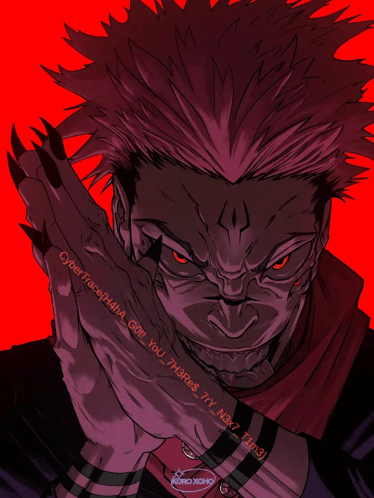
CyberTrace{H4hA_G0t!_YoU_7H3Re$_7rY_N3x7_T1m3}
Key Notes#
- This challenge is fully breakable through deterministic state replay.
- Hardcoded keys + fixed IV + known seeds remove uncertainty.
- The only real work is reversing operation order correctly.
- Parsing container/padding correctly is more important than raw crypto difficulty.